Skip to content
Misusing Big Words

Misusing Big Words

Uncategorized

A letter to a devoted friend

Posted on February 27, 2008June 6, 2026

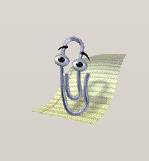
There you are, sitting in the corner, staring at me with those big black eyes and those funny little eyebrows. And that smile—it’s as if you’re saying to me “I know you. I know everything about you. And I accept you.”


Though I never realized it before now, you’re the best friend a guy could ever have, Clippit.

I don’t care what the others say. It doesn’t matter to me when they tell me “It’s just a paper clip, and not even a real one at that.” So what if you can’t hold together my papers the way a normal paper clip would. You hold together my life like no one else can, and to me, that’s what is real.

Sure, they call you the Microsoft Office Assistant, but if only people got to know you, they’d realize there’s so much more. They’d see past the outer façade of joviality into the deeper pain and anguish within. They’d understand that even though you don’t have emotions like us, you still feel things deeply. They’d know that when you have a good idea, and demonstrate your desire to share your knowledge with us through your use of the animated light bulb, you hurt when nobody pays attention to you.

I know you must have watched me make a million mistakes in life, knowing you could help, but not knowing how to tell me without making me feel inferior. But it’s OK, Clippit, because I appreciate now the value of your suggestions. I know you’re just trying to help, and just like any good friend, even though your advice sometimes is pretty worthless, for the most part you are spot on. Like that time I accidentally auto-formatted my English paper—you were there for me then, and you are there for me now.

So I just wanted to tell you, Clippit, how much I value your being around. I feel like I can ask you anything. Even when I ask you silly things like “Help me take over the world,” you always know how to gently bring me back to Earth by telling me instead how to format my paragraphs or add borders to my document. It’s your own subtle way of keeping me in check, and I’m able to understand without getting offended.

Finally, Clippit, I just wanted say thanks. Thanks for being my friend. I owe you one, big guy. I’ll see you in a few days for that big project.
The Acceptable Versus Unacceptable Neighborly Borrow Request

Posted on February 26, 2008

The other night, I had a hankering for my Mom’s Famous Stroganoff. With a skip in my step (as this had been the best idea I’d come up with all week), I headed out to the nearest grocery store (“Social Safeway” as my sister calls it, but we’ll get into that at a later time), to pick up some ingredients.

Arriving back at my apartment, I realized I forgot one minor ingredient: flour. Now you really only need like two tablespoons of flour to make stroganoff and it really isn’t a key ingredient, but it gives the sauce in my Mom’s Famous Stroganoff that special consistency, and being the Gourmet that I am, I could not let myself get away with a missing ingredient. So I ventured to my neighbor’s to borrow some flour.

But something peculiar happened; I hesitated. Being that this is a college apartment complex, I did not expect my punk-rocking neighbors to have flour as a staple ingredient in their cupboards (and I really doubt that they would give up their precious drugs disguised as flour as a practical joke) but I did not feel that knocking down a few doors, measuring cup in hand would be acceptable social behavior in this day and age. Finally, I ended up at my friend’s apartment (who is a frequent baker), and managed to scrounge up the two tablespoons needed for my culinary needs.

This got me wondering: In the past, neighbors have, for the most part, been dubbed as someone to turn to if you should need assistance. Even Dictionary.com defines “neighbor” as “a person who shows kindliness or helpfulness toward his or her fellow humans” (Dictionary.com, 2008). In this day and age, however, it is hard to come by a person who is friends with his or her neighbor. Rarely do we go over to another’s asking to borrow a cup of sugar, a cup of milk or any cup of anything for that matter.

Nevertheless, the past is the past, and some things don’t come back into style. But back in those days there must have existed some fine lines between what was deemed an “acceptable borrow request” and an “unacceptable borrow request”.

I would imagine that a cup of sugar borrowed at 3pm on a Sunday afternoon, was an acceptable amount (I know because of the Outkast saying, “lend me some sugar, I am your neighbor” before I shake it like a polaroid picture). But what about a cup of cereal? Would a cup of cereal borrowed along with a cup of milk (because if you really were a well budgeted person, you would ration out your milk usage accordingly to your cereal consumption) at 7am on a Monday morning be an acceptable borrow request? Maybe and maybe not. Would two cups of sugar still be an “acceptable borrow request” given the same borrowing time frame of 3pm on a Sunday afternoon? Would 4 cups? 5 cups? What quantity starts to surpass the “acceptable borrow request” line, venturing into “unacceptable borrow request” territory?

Maybe the complicatedness of the situation is what drove this piece of social etiquette out of style. We are a society run on convenience and if an affair is not to our liking or advantage, we are very likely not to participate.

But when, exactly, did this custom go out of style? The rush of panic and hesitation I felt must have sparked my social sense and be indicative of some sort of social norm violation. But had I knocked ten years ago, would things have been different?

Only survivors of this great American custom would know for sure.

Uncategorized

Shymmetry Results Part 1

Posted on February 25, 2008June 6, 2026

Shymmetry Photo Contests Results

Thank you to all who have participated in our first Shymmetry Photo Contest! Photo judging has been such a difficult process because all submissions are all just about the coolest things we have ever seen in our entire lives. So great.

I know all of you are anticipating the results, so as not to overwhelm you, the winner for each category will be revealed starting today. We will reveal all of our winners over the next few weeks, so if you submitted a photo, keep a look out, you just may be our next winner!

Our first winners come from Charlottesville, V.A. Riki and Kawai are newlyweds who will be receiving big hugs come this August.

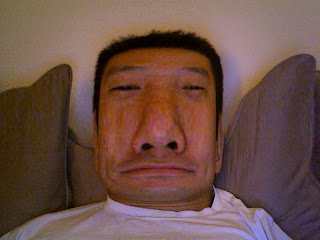
They used their new MacBook to capture their feelings on shymmetry and tie for first place in the categories “First Photos Submitted” and “Most Subtly Shymmetrical.” Shymmetry is very evident here, even though some facial features seem more apparent.

Thank you for your submissions! And good job with your pictures. We hope you had as much fun taking them as we did receiving them!

Those of you late comers, if you are still interested in weaseling your way into our contest, you may submit photos to [email protected]. We may just create a new category for which your photo may be eligible to win.

*For an article relating to shymmetry, click here.

How to tell a convincing lie

Posted on February 25, 2008

I’m a liar. I lie a lot. I mean not a whole lot (don’t worry, ladies), but on occasion I’ll tell a white lie.

Some times, at work, to cover my or someone else’s ass. Some times, in life, to cover my ass, again. Some times, and this is probably most times, for no reason at all.

Actually, that’s a lie. There is always a reason for a lie. To make someone feel better about him/herself (no, of course, I think you are attractive!), or probably more likely to make yourself look better (trust me, that’s 12 inches). Sometimes, the lie is just a small exaggeration. Not hyperbole, but small changes to the truth. How much something cost… How long you did something… Why you couldn’t come out last night… Just little things.

But, this post isn’t about lies or the types of lies we tell. This post is about selling those lies. Being believable. There aren’t many steps (lying actually is pretty easy, that’s probably why so man people do it), but they are all very important.

In my experiences, the following must be true, to pull off a lie.

1. The lie must be believable

I want to say this is the most important part, but it’s not. I think rule three, above all else is the most important. This rule and rule two can be bended with a solid rule three. But this is still important, especially if you aren’t good at rule three.

This should be obvious. If the lie you tell, couldn’t also be true, it isn’t going to work.

Person: “Why didn’t you come out last night?”
You: “Oh, I was fellating Jessica Alba.”

Chances are that one’s not going to fly, even if it was true. Only push the lie as fair as it needs to go in order to cover what you are trying to cover. The lie doesn’t have to be extravagant. In actuality, it shouldn’t be. It should be contextually unassuming and nonchalant so that there is no reason to question it.

2. The lie must be irrefutable, at the time

This rule is a bare minimum. A lie doesn’t need to be completely irrefutable. Sure, a completely safe lie would be, as you don’t need to expand upon or defend it at a later date, but that isn’t always possible. Really, a lie only needs to work at the moment it’s told, it only needs to stand the test of a second. Part of this is knowing your audience, and knowing that they don’t have the knowledge about the lie to refute you.

This is particularly true for fact based lies. It also makes fact based lies the easiest to tell. How many miles is it from here to there? How much does this cost? You can answer these with any answer, you just have to come off confident in your answer.

Which leads to rule three…

3. You must believe the lie, too.

Good salesmen thrive on this. They tell it, whether it is true or not, like their hand is on the bible. When you tell a lie, that is really the most important part, selling it. Which becomes all the more easier if you can convince yourself that it’s true.

This seems obvious, too. If you tell it like you believe it, people have no reason to not to. Why would you not look like you are telling the truth, if you “are”?

Like picking-up people, it’s about confidence. Being confident in what you are saying is always good advice, regardless of the circumstances, but especially in telling a lie.

Sometimes I don’t even know what my mind is thinking…

Posted on February 23, 2008

I wrote this piece after a trip to the movie theater one day. I got about a page into it and then… fizzled… Too bad too, because as I was writing it, I was thinking to myself “Yes! YES! I am insightful! I am wise! This is amazing!” It was like pitching 8 innings of a perfect game, and then walking away from the mound without turning back. Anyway, read on.

Do people who are dying get more out of life?

Case in point: “The Bucket List,” the new movie in which Jack Nicholson and
Morgan Freeman get into all kinds of crazy shenanigans after both have been
diagnosed with terminal cancer. As a film, it was very enjoyable, but not
without its heart-wrenching moments.

However, this is not a review.

What I’m more interested in is the notion of doing all the things you ever
wanted to do in life but just never got around to. After all, that’s what the
bucket list is–a list of things you want to do before you “kick the bucket.”
While I normally applaud this idea and enjoy the romanticism of it, this time
around another thought struck me.

What if you’re the type of person who lives his life like this all of the
time? Someone who doesn’t have a list of things he has wanted to do for years
but never gotten around to because if he wants to do something he does it? Does
not that person deserve a film about himself (even if he can’t narrate it in the
voice of infinite wisdom of Mr. Freeman)?

It brings to mind the old story of the prodigal son–and I’m confident that
no matter what your religious upbringing, you have some familiarity with it. The
elder son stays with the father, helping him around the house, generally being a
good son, while the younger man moves away, goes knee deep in booze and women,
and gets drugged out and sloppy drunk in a Lohan-esque spree, only to come
crawling back to pops when the money is gone. Dad accepts him back and has a
party for him.

It’s a touching tale of unconditional love and forgiveness, except that it
impresses upon us a completely twisted worldview.

Psychologically and economically speaking, why are we rewarding bad behavior?
The prodigal son, like “The Bucket List,” romanticizes the notion of “make your
mistakes along the way, because you’ll have a chance to correct them later.

Nevermind. This doesn’t make any sense.

See what I mean? If anyone can make sense out of this or can pull out a unifying theme/idea that is worthwhile, go for it. I just found it funny that I had actually compared the Bible to Lindsey Lohan. By the way, does anyone remember when she used to be hot (ie “Mean Girls“)? What happened there?

Stormy Music

Posted on February 22, 2008

I lay in bed, reading quietly. The window, inches from my head, sounds with the tiny noises of raindrops drumming against the glass and the sill below like so many popcorn kernels popping. Through the pillow, the muffled sound invades my ears and reminds me of the sound of hunger, of my stomach growling, or of the sound of gas bubbles making their way through my intestines. For some reason, those two things sound the same. As I half listen to the rain and hear this sound of hunger and pre-flatulence, I feel myself getting nauseous.

It’s not just the sound that nauseates, it’s the idea, the feeling. I am alone, in this room far from home, there is no one here that will come to drink hot cocoa and tell stories about the times the rain spoiled their birthday party or car accidents they were involved in caused by rain-slick roads or how nice it is to curl up in an easy chair in front of the fire when the weather starts to make one depressed. There’s just me, the wind howling and distracting me from the pages of my book.

I wrap myself in the covers, but I can’t seem to get warm. No, that’s not right, I’m sweating, I must be warm. I just can’t get comfortable. I turn to one side, then the other, letting the blankets ooze under my body, cocooning myself in warmth, but it’s not enough to warm my thoughts.

I read the last sentence again, then I read the whole paragraph again, then I read the whole page again, and each time I finish I realize I don’t remember anything about what I just read. Did anything important happen to the characters? Did anyone die? Was anyone born? I think I would remember something like that, so I decide none of that happened and I continue reading. I push through to the end of the chapter and close the book, knowing that tomorrow I will pick it up and read the whole chapter again.

All the while the nauseating rain drums the windows, beating out the steady music of stormy weather.

That Tattoo on My Ass is Rafiki

Posted on February 21, 2008

If I were to ever get a tattoo, it would probably be of Rafiki. See below…


I know as a Caucasian male, that is somewhat sacrilegious. I should get a Kanji tattoos (and continue to perpetuate the White man, asian fetish stereotype) or an anchor or a skull or something, I don’t know.

Since a tattoo lasts forever, or until an expensive surgery, my stance is that tattoos should represent an important motto or role model or guiding principle for life. It is something that should reminded you of how you are supposed to behave. “F— your mom” probably would not be appropriate.

That’s why, if I had to, I would choose Rafiki.

Perhaps the greatest character ever put to animated film, Rafiki is the perfect representative of how life should be led. He’s a little crazy, a little nuts. He’s a jokester AND a philosopher.

Take, for instance, this nugget he shared with a distraught Simba in the classic animated film “The Lion King”:

Adult Simba: I know what I have to do. But going back will mean facing my past. I’ve been running from it for so long.
[Rafiki hits Simba on the head with his stick]
Adult Simba: Ow! Jeez, what was that for?
Rafiki: It doesn’t matter. It’s in the past.
[laughs]
Adult Simba: Yeah, but it still hurts.
Rafiki: Oh yes, the past can hurt. But the way I see it, you can either run from it, or… learn from it.
[swings his stick at Simba again who ducks out of the way]
Rafiki: Ha. You See? So what are you going to do?

That’s golden. You just can’t come by gems like that anymore.

Sure, a monkey head tattoo, depending on its placement on my body, could be weird and awkward, but for a reminder of those lessons on a daily basis, it seems worth it.

What kind of tattoo would/have you gotten?

Steps to becoming a grown-up: Part One

Posted on February 20, 2008

The moment you step out of college, into a work setting, and into some pseudo-responsibility, you don’t become an adult. You might fake it from “9 to 5”, maybe even fool a person or two with a clever ruse, but you’re not. You might binge drink a little less, wake-up naked in a stranger’s yard a little less frequently, and have one or two fewer illegitimate children. And sure, this is progress, but the steps to becoming a grown-up are less about what you stop doing and more about what you start doing.

It is a gradual process, like pooping a pine cone, and it only slowly comes into fruition.

In this umpteen part series, we will look in depth at the process, its individual attributes, step by step, but in no particular alphabetical order.

Part One – Listening to NPR

Talk radio is for grown-ups. No one calls in to give shout outs to the Roosevelt High School junior class or request “Low” by Flo-Rider featuring T-Pain (which is a bit of a shame). It is discourse. Sometimes it’s civil, sometimes not, sometimes it’s smart, sometimes not, sometimes it’s funny, and sometimes not. It’s people talking about stuff. Political stuff. Sports stuff. Life stuff. Grown-up stuff. Kids don’t listen to talk radio.

And if talk radio is the cookie aisle at the grocery store, NPR is the E.L. Fudge Cookies right there on on the middle shelf.

Unlike the scrumptiously delicious E.L. Fudge cookies, though, that are excellent and perceived as nothing but awesome, NPR doesn’t have such a clean rap. Imagine you’re O.J. Simpson and you didn’t kill Nicole Brown and Rob Goldman, no matter how innocent you are, you are always going to be seen as guilty. NPR is in the same conundrum, and arguably much less guilty, of crimes of boredom, stuffiness, banalness and generally seen by the youth as “lameo” (Side note: If you still think youth say “lameo” you also inadvertently have taken a step into adulthood).

It’s actually very much “not lameo”.

Well, some of its programming is. The classical music block is pretty bad. Garrison Kellior is funny, but he talks at the speed of glass bottle Heinz ketchup and with a lack of liveliness unparalleled outside of nursing homes.

But there is some really good stuff on there, too. “This American Life” is, 90% of the time, interesting; “In Character” and “Popular Culture” are always intriguing; and I’ve just started listening to “alt.NPR: Love and Radio”. (Surprisingly, as a sign of hipness, all of these programs are available as podcasts for your convenience and listening pleasure.)

The majority of these programs are people talking about life and elements of life. They tell stories. And as I said, sometimes they’re funny, and they’re always interesting. A lot of times the stories are relatable, able to put your life into perspective, or at least spur some thought. Other times they are absurd, and you get roped in because you can’t believe they are true.

And true stories are always better. They get away with more than fiction. You sit there thinking “bull shit, that couldn’t happen”, but it did and it does and the people on NPR are articulate, so the rope just keeps pulling you along.

Maybe NPR gets a bad rap from uninformed kids. PBS sucks with its Masterpiece Theater and Jane Austin films and America’s youth projectile vomit those feelings on to its sibling, public radio. This is not the case. Listening to NPR will distill those misconceptions. Or maybe, you hit a certain point in your life, a stage in your development to becoming a grown-up, that when you finally listen to NPR, you are at a place in your life that you can’t help but find it interesting.

In either case, and for whatever reason, once you start listening to NPR, it’s one small step for man, one giant leap towards Depends.

The Selfish Hippie 2: Full Throttle

Posted on February 19, 2008
This is the second installment of the Selfish Hippie. For the previous post, go back.

As you know, I’m a fan of conserving, but I don’t do it for the environment. No, Mother Nature is getting the fringe benefits of my selfishness. I conserve because I’ve found ways to do it that help me and the economy, financially. Here’s some of the more recent ways to save money by being hippie-like.

Take Stuff from Work
This one is a given: slowly siphon pens, paper, paper clips, tape, glue, scissors, etc. from your desk or supply closet at the office. Let’s face it, they don’t really need one set of each of these for every desk; people are irresponsible and will lose them somehow anyway. This way, you are constantly borrowing each others materials, building a community (which hippies love) and at the same time sticking it to the man in a small way.

Reverse Junk Mail

Speaking of sticking it to the man, here’s a miniscule but fun way to punish companies who send unsolicited mail while at the same time supporting your government (that way you don’t have to feel bad stealing from the government at other times). Those credit card offers you get every week all come with a pre-paid self-addressed envelope. If you simply throw away the offer, the company has spent about 1 cent sending that to you. However, if you send them back that pre-paid envelope, it now costs them 39 cents at least (more as postage rates go up). Just make sure you don’t include any personal info so they don’t think you’re signing up for their crappy offer. (Some people go even further with this…)

Get Your Sh*t Together
Every month or two, do a complete full scale assault on bedrooms, closets, cabinets, common areas, garages, etc… anywhere you keep a lot of junk. Go through and clean and organize all the junk, and you’ll be amazed at the things you find. About 1/4 of it you can sell on eBay, 1/4 you can donate to charity ($$ tax write-off $$), 1/4 you’ll likely want to keep or can reuse somehow, and 1/4 of it you can throw away.

“Trade” with Your Workplace
Speaking of reusing old junk, oftentimes cleaning out a home office will yield all kinds of strange office supplies which you probably never used (for instance, that industrial sized box of paper clips you bought at Costco because, well, you never know when you’ll need to clip paper together). You could keep these in your home office if you want, but it’s a much more practical idea to bring them to your work. Offices use this kind of stuff all of the time, so you might as well give back a little, since you won’t be using them. Plus, this way there’s no guilt for pilfering stuff from your office (see above). This way, you’re not even stealing, you’re trading!

Do you have any tips on how to become a Selfish Hippie? Look for more installments in the near future.

Wiping or Flicking? Who Nose!

Posted on February 17, 2008

Cost-Benefit Analysis: Booger Flicking vs. Booger Wiping

I don’t care what you say about boogers, everybody pulls one out every now and then. Maybe it’s that one elusive fellow that doesn’t quite come out when you blow your nose, or perhaps you get no greater sense of accomplishment than digging in nice and deep in the morning and cleaning out all the overnight gunk buildup. Either way, from my travels and my study of different peoples, one thing seems to be a uniting factor.

Everybody is a nose-picker.

Some people find nose-picking disagreeable. To you disagree-ers, I disagree. It’s a necessary bodily function, like burping and farting (and almost as fun, too!), and it helps keep you healthy and even exercises your dexterity. After all, boogers are all the dirt, dust, and other allergens polluting the air that your nose is able to catch before you breathe them into your lungs. Don’t believe me? Check out this article (in easy to read, “kid-friendly” terms) about all the gross stuff that make up boogers.

So, we’ve established that everyone picks their nose, and we’ve established that nose-picking is good to get all that stuff out of there. Now, what do you do with it once you’ve got a fresh one sitting on your finger?

In my estimation and research, there are three options: put it in a tissue and throw it away, wipe it on an unseen surface (such as underneath the driver’s seat or under a desk), or flick it as far as possible (I’ve seen one fly across an entire classroom before). For the purposes of this article, let’s assume no tissue is available, leaving only two of the three options available.

Costs of wiping

  • Makes that part of chair/desk/etc unusable, except for booger wiping.
  • Probability someone will notice and be disgusted rises sharply.
  • You miss out on the fun of flicking.
Benefits of wiping

  • You know exact location of booger.
  • Next time you wipe, you can compare sizes, shapes, and consistency with previous boogers.
  • If sitting in furniture of someone you despise, it’s a nice way to leave them a small gift.
  • Due to composition, boogers are always wipeable, but not always flickable.
Costs of flicking

  • You don’t know exactly where it went (ie possibility of stepping on booger later).
  • Possibilty of someone you know and like being hit by “friendly fire.”
  • Sometimes won’t work if consistency is particularly sticky.
Benefits of flicking

  • It’s fun.
  • If in a moving vehicle, you can flick it out the window and send it back to it’s home in nature.
  • Can be used as a subtle attack method against everyday enemies.

I must say I’m surprised at the results. I thought for sure flicking would be the clear winner, but it seems costs of flicking are equal to the benefits, while the benefits of wiping outweigh the costs. It seems, though, that if you practice and can control the direction and velocity (as well as account for wind resistance and aerodynamics), flicking could be a better choice.

What do you think? Am I missing some costs? Benefits? Which do you prefer, and why? Names can remain anonymous, though as we’ve already established, everyone is a booger-picker, so there should be no shame.

  • Previous
  • 1
  • …
  • 6
  • 7
  • 8
  • …
  • 15
  • Next

Recent Posts

  • Misusing eCards is back!
  • Surfing the Oregon Coast
  • The Program
  • Golf Lessons and Post Traumatic Stress
  • The Selfish Hippie says “You’ve got baggage!”

Archives

  • November 2008
  • July 2008
  • June 2008
  • May 2008
  • April 2008
  • March 2008
  • February 2008
  • January 2008
  • December 2007
  • April 2007

Categories

  • Uncategorized
©2026 Misusing Big Words | WordPress Theme by SuperbThemes